Doubting the range number on a scooter’s box? Electric scooter range explained in one line: real riding usually delivers about 71 percent of the claim, so multiply by 0.7 for a safe planning figure.
If you are still choosing a model, our electric scooter buying guide shows where range fits next to the other things worth checking.
| Item | Value |
|---|---|
| Average share of claimed range delivered (12 tested scooters) | 71% |
| Best result in that test | 90% (VMAX VX5 Pro GT) |
| Worst result in that test | 53% (Segway Ninebot Max G30P) |
| Energy used at normal commuting speeds | Roughly 25 to 35 Wh per mile |
| Average across 514 rider reports | 73.6% of claimed range |
| Riders over 220 lb | Roughly half the claimed figure |
These figures come from RiderGuide’s claimed-versus-tested comparison and ScooterRank’s rider-report study. Figures can change when the sources update, so check the source before you rely on them.
Why claimed range runs high
Claimed range is a best case, not a promise. RiderGuide describes the standard industry test as a light rider, often around 130 lb, on flat ground in perfect weather, using the slowest speed mode at a steady pace with no stops.
Real commuting adds everything the lab loop leaves out:
- A heavier rider
- Stoplights and stop-and-go traffic
- Hills and wind
- Cold mornings
- The fastest mode the scooter offers
Test descriptions vary between makers. One scooter maker’s range guide lists a 150 lb rider, a constant 12 mph and 70°F weather as lab assumptions, and suggests expecting 60-80% of the advertised range.
Independent testers build harsher loops. RiderGuide’s test protocol uses a route with many stops, rough roads and some uphill travel, and it typically gets 50% to 70% of the manufacturer-claimed range.
Claimed vs tested range for real scooters
In its comparison of 12 popular scooters, RiderGuide found an average of 71 percent of claimed range delivered, with a median of 74 percent. The best result was 90 percent and the worst was 53 percent.
Four examples from that comparison show the spread between claimed and measured miles.
| Scooter | Claimed | Tested | Delivered |
|---|---|---|---|
| VMAX VX5 Pro GT | 22 mi | 19.7 mi | 90% |
| Hiboy S2 | 17 mi | 12.7 mi | 75% |
| EMOVE Cruiser S | 62 mi | 43.6 mi | 70% |
| Segway Ninebot Max (G30P) | 40.4 mi | 21.6 mi | 53% |
The pattern is that modest claims tend to hold up. RiderGuide notes that the four most honest scooters all claim under 27 miles, while the two biggest claims in the test (62 and 40.4 miles) both delivered 70% or less.
A big battery on easy terrain can still meet a big claim. In a 2020 Electrek test, a rider in Florida used the highest power mode and a scooter rated at 1.6 kWh, and it could really achieve 100 km (62 miles). The route had little topography, so hills were not part of that test.
Claims for one model can also disagree with each other. The Wolf King GT range test lists retailer figures from 40 miles to 112 miles, then measured 39.34 miles at an average speed of 31.6 mph. An earlier run with the headlight on and low tire pressure managed 35.88 miles, which suggests headlight and tire pressure together can decrease range by about 10%.
How to estimate real range before you buy
You can turn any listing into a planning number in a minute:
- Multiply the claimed range by 0.7, which RiderGuide calls a safe planning number based on its testing.
- Check the battery in watt-hours. RiderGuide says normal commuting speeds use roughly 25 to 35 Wh per mile, so a 551 Wh battery means 16 to 22 real miles.
- Or divide the watt-hours by 30, which RiderGuide says gives roughly 18 real-world miles for that same 551 Wh battery.
- Subtract more if you are heavy, ride hills or ride in the cold. RiderGuide says riders over 220 lb should plan on roughly half the claimed figure.
Other sources land in the same zone. ScooterRank’s rider reports average 73.6 percent of claimed range. The Levy guide says real-world range is 60-80% of advertised, so treat your planning figure as a band, not a promise.
Before you trust any listing, ask four questions:
- Which rider weight and speed mode did the claim use?
- How big is the battery in watt-hours?
- Has an independent tester measured the range with stops and hills?
- Is the claim modest or unusually large for the battery?
If you want a week of 5 mile commutes on one charge, RiderGuide advises buying a claimed range of 35+ miles, not 25. Once you have a realistic range target, you can compare models in our guide to the best electric scooter for commuting.
What drains the battery fastest?
Range loss is rarely one thing. RiderGuide says rider weight, speed, hills, cold weather and stop-and-go traffic together usually cut 25 to 45 percent from the claim.
- Speed and mode: claims use a slow mode, but RiderGuide points out that nobody buys a 30 mph scooter to ride it at 9 mph.
- Cold weather: the Levy guide says cold weather cuts 30-40%.
- Tire pressure: the same guide says under-inflated tires reduce efficiency by 5-10%.
- Battery age: that guide also notes that older batteries hold less charge.
- Rider weight and hills: both pull the battery down faster, so heavier riders should plan on a much lower figure than the claim.
Riding mode matters as well. ScooterRank says eco mode gets closest to the claim and sport mode is furthest, so judge a claim against the mode you will actually use.
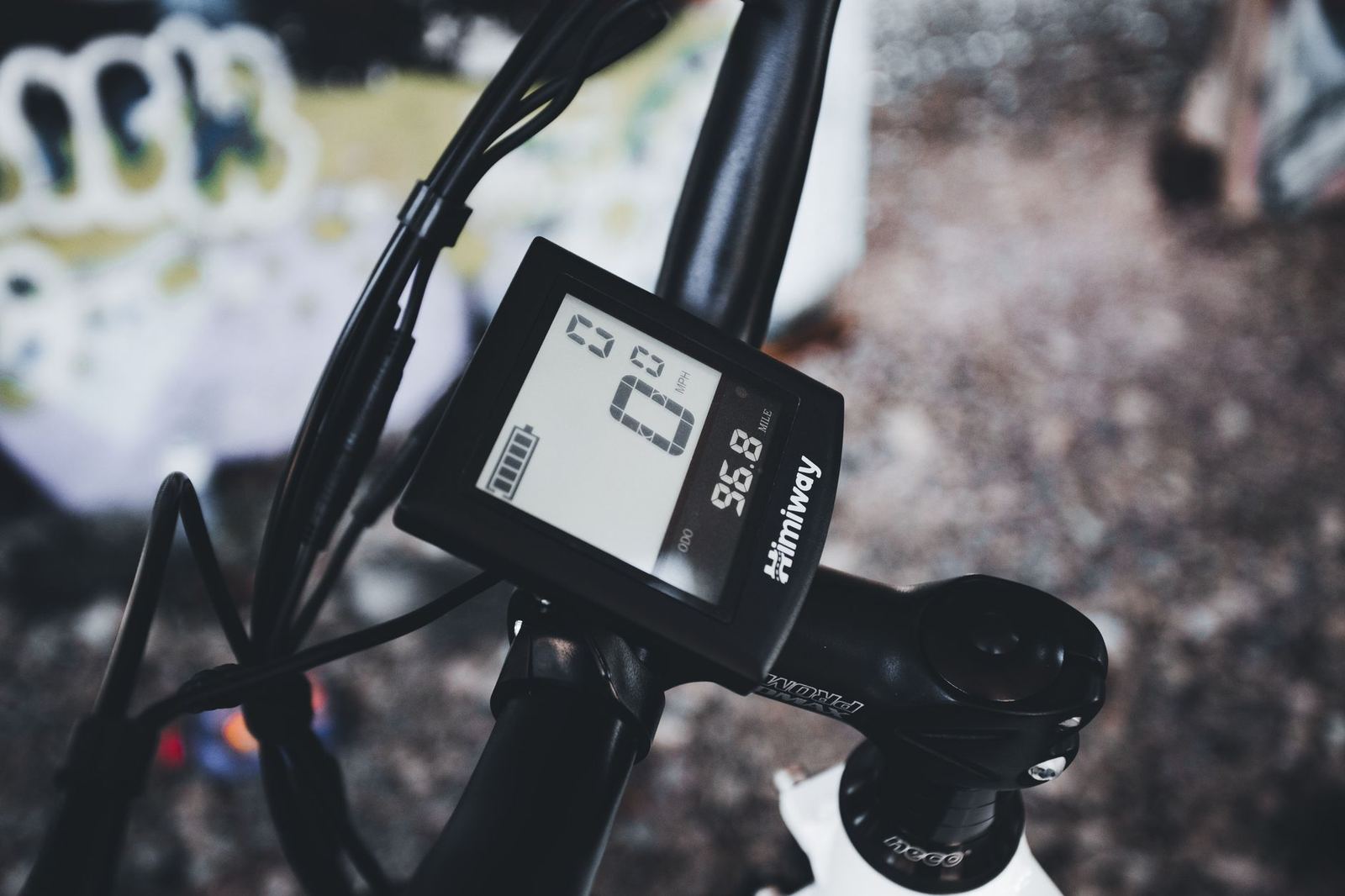
Do not lean on the dashboard alone. In the Electrek test, the scooter’s own odometer and tripmeter read about 10% higher than they should, so the tester used GPS data instead.
Motor ratings are a separate spec from battery size, and our explainer on electric scooter motor power watts covers what they mean.
Does a higher price buy a more honest range?
ScooterRank built its study from 514 range reports submitted by riders across 142 models. Those riders reported an average of 73.6 percent of claimed range, a typical shortfall of about 21.1 km.
The same study splits results by price, and the tiers sit close together:
| Price tier | Share of claim delivered |
|---|---|
| Under $500 | 76.8% |
| $500-$999 | 73.6% |
| $1,000-$1,999 | 75.2% |
| $2,000+ | 77.2% |
Every tier lands between 73.6 and 77.2 percent, so a higher sticker price does not guarantee a more truthful claim. Keep the method in mind: ScooterRank says the figures are what riders reported for their own scooters, not lab measurements, and tells readers to treat individual figures as directional, not definitive.
Frequently asked questions
How accurate are electric scooter range claims?
Show answer
In RiderGuide’s test of 12 popular scooters, real range averaged 71 percent of the claim, from 90 percent down to 53 percent. ScooterRank’s rider reports put the average at 73.6 percent.
Why is my scooter’s range lower than advertised?
Show answer
Claims are measured with light riders at low speeds on flat ground without stops. RiderGuide says rider weight, speed, hills, cold weather and stop-and-go traffic reduce range, usually by 25 to 45 percent combined.
How do I calculate real electric scooter range?
Show answer
Multiply the claimed range by 0.7, or divide the battery’s watt-hours by 30. RiderGuide gives the example of a 551 Wh battery, which divided by 30 gives roughly 18 real-world miles.
Can a scooter deliver its full claimed range?
Show answer
Sometimes. The VMAX VX5 Pro GT delivered 19.7 of its claimed 22 miles, or 90 percent, in RiderGuide’s comparison. A 2020 Electrek test of a large-battery scooter reached its 62-mile claim on a route with little topography.