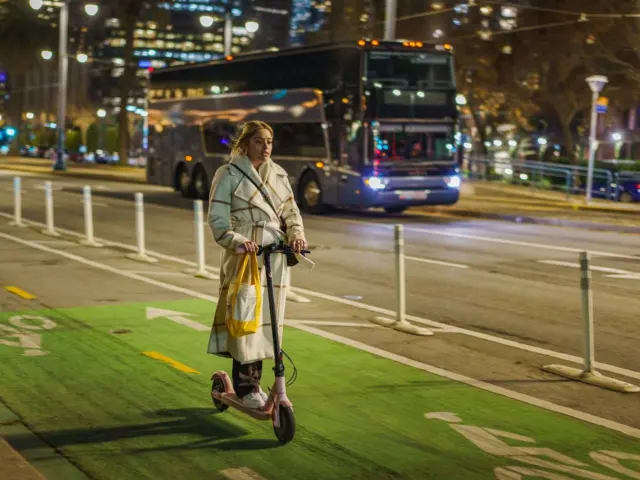
You want to ride without getting hurt or fined. The core electric scooter safety rules are simple: wear a helmet, keep your speed down, follow traffic law and check your local rules before you set off.
| Rule | Value |
|---|---|
| Maximum speed (California) | 15 mph, even if the posted limit is higher |
| Helmet (California) | Required for riders under 18 |
| Licence (California) | Valid driver’s license or instruction permit |
| Street speed limit for riding (California) | No riding on streets above 25 mph, unless in certain designated bikeways |
| Passengers | One rider per scooter |
| Front light at night (California) | White light visible from 300 ft |
These figures come from UCLA Transportation’s micromobility safety page and the Irvine Police Department’s electric scooter safety post. Rules differ between places and can change, so check the source before you rely on them.
What electric scooter safety rules actually cover
Every city and state writes its own mix of rules, but they tend to fall into the same four groups. Once you know the groups, it is much quicker to check what applies where you ride.
- Who may ride: licence, age and passengers.
- Where you may ride: roads, bike lanes, sidewalks and shared paths.
- What your scooter needs: working brakes, lights and reflectors.
- How you ride: speed, hands, alcohol and distractions.
The detailed examples in this guide come mostly from California and Seattle, because those are the places covered by the sources used here. Treat them as examples of how rules are written, not as a promise that your city matches.
The Harborview Injury Prevention & Research Center notes that laws vary by city and district, and that some places prohibit riding scooters on sidewalks. For a wider comparison, the guide to electric scooter laws by country is a sensible next step.
Rules exist because the injuries are real. The same Harborview centre reports that e-scooter related medical encounters increased between 2020 and 2023, and that injuries linked to e-scooter use include fractures, head trauma and facial injuries.
Its trauma registry also shows nearly a 36% rise in e-bike and e-scooter related injuries in Seattle from 2023 to 2024. The centre’s plain advice is that many accidents can be prevented by simply slowing down.
Scooters share space with walkers, cyclists and drivers, which is a theme the site covers more broadly under urban mobility. Good habits matter most because you are mixing with traffic that is bigger, faster or less predictable than you are.
Who can ride an electric scooter?
In California, UCLA’s summary of the law says operators must have a valid driver’s license or instruction permit. As of the Irvine Police Department’s page, which carries a 2026 copyright notice, the same requirement applies, and young children who do not meet the licensing requirements are prohibited from riding.
Age guidance goes further in some places. The Harborview page says the American Academy of Pediatrics stresses that children under 16 should not operate or ride motorized or electric scooters, and that in some cities it is illegal for kids under 16 to use an e-scooter.
Helmets are a separate age rule. UCLA’s summary says helmets are required for riders under 18, and the Irvine post says the same, adding that the helmet must be properly fitted and fastened.
A few rules about who may be on the scooter apply to nearly everyone:
- One rider per scooter. UCLA’s summary lists no passengers, and the Irvine page says passengers are not permitted.
- No alcohol or drugs. UCLA says you must not ride while under the influence of alcohol or any drug.
- No stunts with other vehicles. Do not hold onto or attach to another vehicle.
Harborview adds the reasoning on passengers: additional riders increase the risk and severity of collisions. A second person changes your balance and your stopping distance, so the rule is easy to understand even where it is not enforced.
Breaking the rules can carry a price on your record. UCLA’s summary warns that a moving violation could result in points against your driving record.
Money questions come up too, such as whether any cover applies if something goes wrong. That is a different topic from safety, and the page on electric scooter insurance is the place to start.
Where you can ride and park
Location rules cause the most confusion because they change from city to city. UCLA’s summary of California law says riders have the same rights and responsibilities as motorists, so you obey signs and signals, stop at stop signs and follow the direction of traffic.
That summary also sets out how to position yourself on the road:
- Do not ride on streets with a speed limit above 25 mph, unless you are in certain designated bikeways.
- Stay near the right curb or in a bike lane when one is available.
- Leave the bike lane only to pass safely, turn, avoid hazards or approach a legal right turn.
- Signal before leaving the lane.
Seattle draws its lines differently, according to the Harborview page. E-scooters are allowed on roads with speed limits up to 25 mph, in bike lanes and on shared-use paths, but they are prohibited on sidewalks, city-owned or controlled parking lots, city parks and roadways with speed limits over 25 mph.
The same page notes that if there is no bicycle lane, some cities advise riding on the road when the limit is 25 mph or lower, or on the sidewalk when the limit is higher. That advice conflicts with places where sidewalk riding is banned, so local law always wins over general tips.
Sidewalks
As of the Irvine Police Department’s page with a 2026 copyright notice, riding electric scooters on sidewalks is prohibited in California. The post points out that bicycles and e-bikes are allowed on sidewalks in Irvine, but electric scooters are not.
UCLA’s summary allows one narrow exception: sidewalk riding only as may be necessary to enter or leave adjacent property. If you are asking can you ride an electric scooter on the sidewalk in your own town, check the local code rather than assuming.
Turning, crossing and passing pedestrians
UCLA’s summary tells riders to stop, dismount and walk the scooter across the crosswalk when making a left turn on a two-way street or a right turn on a one-way street. It is slower, but it keeps you out of the path of fast traffic while you are at your most exposed.
Pedestrians always have priority in that summary: riders must yield to pedestrians. Harborview adds the practical side, which is to slow down and use your voice or the bell when passing.
Parking
Parking is a safety issue as well as a courtesy. UCLA asks riders to park scooters upright and away from the path of travel, and not to block walkways, ADA pathways or stairs.
On that campus, improperly parked devices may be relocated, immobilized in place or impounded. A scooter lying across a footpath is a trip hazard, particularly for people with limited vision or mobility.
Gear, lights and pre-ride checks
Start with the legal minimum for equipment. UCLA’s summary says California scooters need brakes, and the motor must disengage when the brakes are applied.
Lighting rules for night riding are specific, and UCLA lists them as follows:
- A white front light visible from 300 ft.
- A red rear reflector visible from 500 ft.
- White or yellow side reflectors visible from 200 ft.
Other places set different distances. The Harborview page says that in Washington State a motorized foot scooter must have a front lamp emitting white light visible for at least 500 feet to the front, plus a red rear reflector. Always check the distances in your own area before you buy lights.
A quick check before every ride
Harborview advises checking for damage before riding, because damage can make you lose control and crash. Work through the list in the same order each time so it becomes a habit:
- Handlebars: tight, straight and free of play.
- Brakes: they grip and the motor cuts out when they are applied.
- Throttle: it returns smoothly when you let go.
- Bell and lights: both work.
- Tires, cables and frame: no obvious damage.
The Harborview page also tells you to test the device, so you know how to use the brakes and how long it takes to stop. That knowledge matters in an emergency stop, and the guide to electric scooter braking safety goes deeper on technique.
What to wear
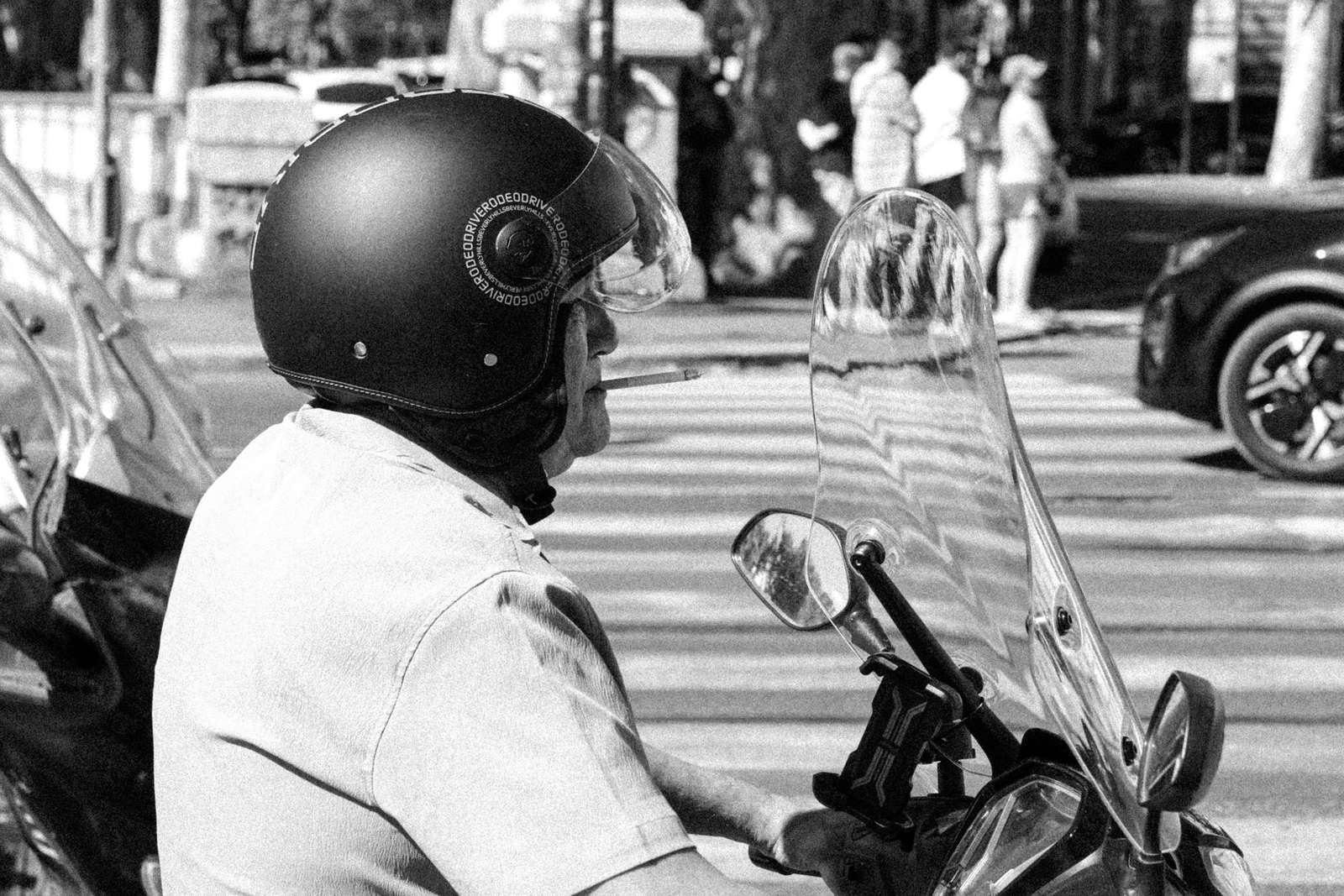
Wearing a helmet while riding an electric scooter can help decrease the risk of traumatic brain injuries, according to Harborview. The Irvine post says helmets significantly reduce the risk of head injury, and the guide to the electric scooter helmet covers fit and choice.
The Irvine post encourages all riders to wear additional protective gear, such as closed-toe shoes, elbow and knee pads, and reflective clothing. Harborview agrees that closed-toed shoes plus bright, reflective clothing, especially at night, can help decrease your chances of injury.
If you are still choosing a scooter, the electric scooter buying guide helps you compare models. Whatever you pick, lights, a bell and reliable brakes belong on your must-have list.
Riding habits that prevent crashes
Speed is the habit that matters most. California’s rule, as summarised by UCLA, is that the limit is always a maximum of 15 mph, even if the posted limit is higher, and the Irvine post gives the same maximum. Limits differ elsewhere, so the guide to the electric scooter speed limit is worth reading for your area.
Where you put your hands matters too. UCLA’s rules say always keep at least one hand on the handlebars, while Harborview goes further and says always keep both hands on the handlebars and keep items off them. UCLA adds that handlebars should be at or below shoulder level.
Distraction is the next risk. UCLA says headphones or earplugs should not be worn in both ears, with hearing aids allowed, and Harborview warns that talking on your phone, listening to music and even talking with others can prevent you from hearing the environment.
Be seen, and expect not to be
Harborview points out that e-scooters are small, quick and silent, which makes it difficult for others to spot you, especially in parking lots and structures. Its advice is to expect vehicles and pedestrians not to see you, slow down and plan ahead.
Some habits that follow from this:
- Use the bell or horn to alert others.
- Avoid abrupt, unpredictable movements.
- Stay alert and remove distractions before you ride.
- Pass pedestrians slowly and announce yourself.
Watch the surface
Small things can stop a small wheel. Harborview warns that uneven surfaces, cracks and small objects on your pathway can stop the e-scooter suddenly and throw you off.
Its tip for bumps is to slow down and lean back. Scan the ground ahead rather than only looking at traffic, since a scooter has little suspension to forgive a missed pothole.
Battery, charging and weather
Lithium-ion batteries are the other big safety topic. UCLA’s page says batteries in e-mobility devices can catch on fire or explode if used incorrectly, damaged, or installed in devices that have not been tested to established safety standards.
For the full picture, see the guide to electric scooter battery fire safety. The core charging habits from UCLA’s page are below:
- Do not charge your device unattended or overnight; only charge when you are present.
- Turn the device off while it charges.
- Wait at least 30 minutes after riding before charging, to prevent overheating.
- Plug the charger directly into a wall outlet, not an extension cord or power strip.
- Use only the battery and charger that came with your device.
- Do not charge near exits, including bedroom doors, windows and stairways.
Storage matters as well. UCLA says to store batteries and devices at room temperature and not to leave them in a hot car, in direct sunlight, near heat sources or in freezing temperatures.
Warning signs and emergencies
UCLA says to stop using the device immediately if you notice any odors, changes in shape or color, leaking or odd noises. If a fire breaks out, leave the area immediately and call 911, and do not attempt to put the fire out yourself.
Do not put lithium ion batteries in the trash or regular recycling bins. Take them to a designated battery recycling location or contact your local waste department.
Rain, ice and cold
Water and electronics do not mix well. UCLA advises avoiding exposing your battery and device to a lot of moisture, and the guide to riding an electric scooter in the rain explains how to manage wet rides.
For cold weather, Harborview says to ride cautiously in icy or snowy conditions. Take extra care on bridges, overpasses and shadowed areas, which are first to freeze and last to melt.
Brake slowly, not suddenly, and avoid sharp turns on ice. On the worst days, Harborview suggests considering other means of transportation, such as transit.
Frequently asked questions
Do I need a license to ride an electric scooter?
Show answer
It depends on where you ride. In California, UCLA’s summary and the Irvine Police Department’s page both say operators must have a valid driver’s license or instruction permit, so check your own local rules.
What is the maximum speed for an electric scooter?
Show answer
In California the maximum is 15 mph, even if the posted limit is higher, according to UCLA’s summary. Other places set different limits, so confirm yours.
Is it safe to charge my scooter overnight?
Show answer
UCLA’s guidance says not to charge your device unattended or overnight, and to charge only when you are present. It also says to unplug the device if you need to leave.
Can children ride electric scooters?
Show answer
Rules vary. The Harborview page says the American Academy of Pediatrics stresses that children under 16 should not operate or ride motorized or electric scooters, and California’s rules summarised by UCLA require helmets for riders under 18.
Should I ride in the bike lane or on the sidewalk?
Show answer
Harborview says to ride in the bicycle lane if possible, since the risk of injury increases on both sidewalks and on roads with vehicles. Where sidewalks are prohibited, as the Irvine page says they are in California, stay off them.