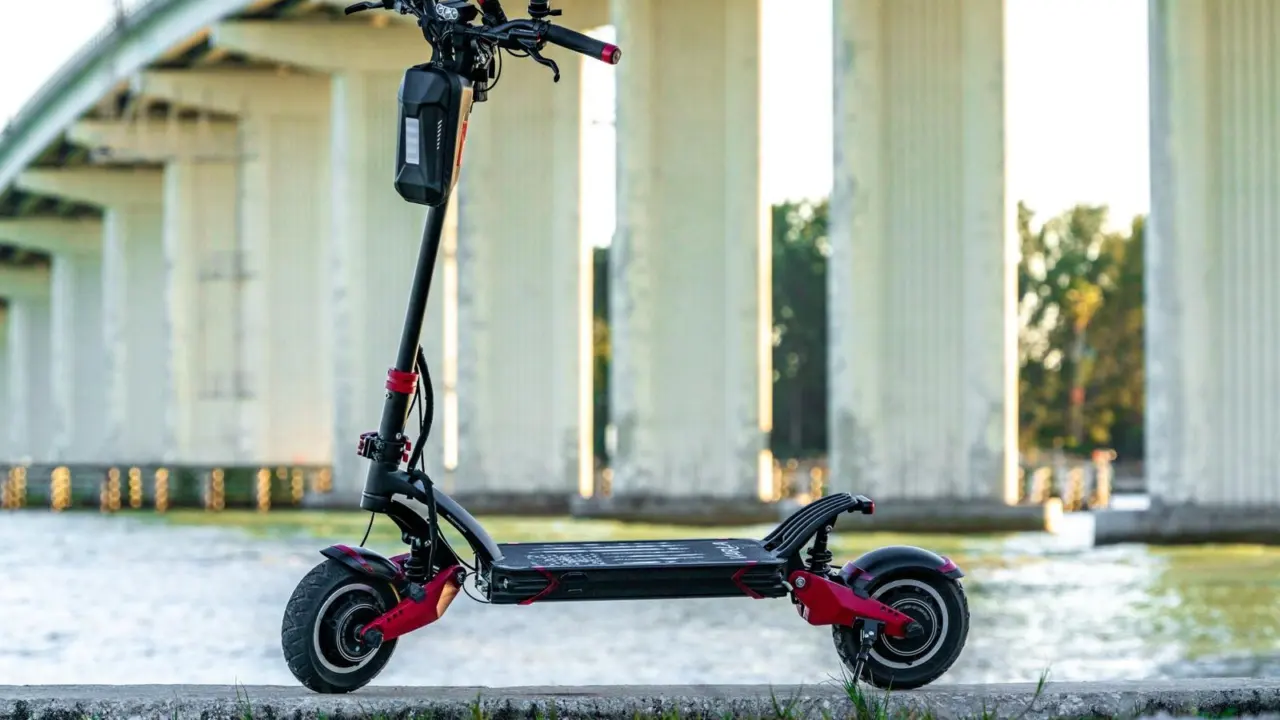
Worried your scooter could start a fire while it charges? Good electric scooter battery fire safety comes down to using the right charger, charging only while you are awake, and keeping the scooter away from exits.
This guide sits within our wider look at electric scooter safety rules, so start there for the full picture.
| Key fact | Value |
|---|---|
| Fires caused by e-bikes and e-scooters reported by London Fire Brigade, 2019 | 8 fires |
| Same measure, 2020 | 24 fires |
| Same measure, by December 2021 | 59 fires |
| UK fire-related fatalities involving lithium-ion e-bikes or e-scooters, 2023 | At least ten |
| What fire services say to do if a battery catches fire | Get out, stay out, call 999 |
These figures come from the National Fire Chiefs Council and Dorset & Wiltshire Fire and Rescue Service. They can change, so check the source before you rely on them.
Why scooter batteries catch fire
Most e-scooters run on lithium-ion batteries that you charge at home. On occasion those batteries can fail catastrophically, and the National Fire Chiefs Council notes they can “explode” or lead to a rapidly developing fire.
The underlying problem is thermal runaway, an uncontrollable, self-heating state that can lead to smoke, fire or explosion. According to UL Standards & Engagement, damaged batteries are at greater risk of entering it.
The trouble does not only happen on the charger. The same UL guidance says a thermal runaway incident can take place hours or even days after a battery has been damaged or exposed to extreme hot or cold temperatures.
Legal status is a separate question from fire risk. As of the Department for Transport guidance published on GOV.UK on 1 February 2024, only e-scooters in official rental trials could be used legally on UK roads, and privately owned ones were classed as powered transporters.
How to charge an electric scooter safely
Most charging rules are simple habits. The GOV.UK battery guidance asks you to use only the charger supplied with the scooter, or a replacement authorised by the manufacturer.
Use this checklist each time you plug in:
- Check the manufacturer’s instructions for charge times, and unplug the charger once the battery is full.
- If the battery is hot after a hard ride, let it cool before charging.
- Keep chargers and battery packs uncovered while they charge.
- Plug straight into a wall socket where you can. If you must use an extension lead, uncoil it and make sure it is rated for the load.
- Stay awake and nearby while the battery charges.
Fire services are blunt about the last point. Their advice, repeated by Dorset & Wiltshire Fire and Rescue Service, is not to leave batteries charging while you are asleep or away from the home, because you can only respond quickly if you are awake and alert.
Leaving a battery plugged in after it is full is a common slip. In a UL Standards & Engagement survey, more than half (55%) of e-bike owners admitted to doing it. A timer or a phone reminder is an easy fix.
Where to store and charge your scooter
Pick a spot that will not trap you if something goes wrong. The GOV.UK guidance says not to charge a scooter where it could stop you leaving your home safely, and to avoid escape routes and communal areas of multi-occupied buildings.
A shed or garage separate from your home is the best option where you have one. Keep the scooter and charger away from combustible or flammable materials, and out of excessively hot, cold or damp areas.
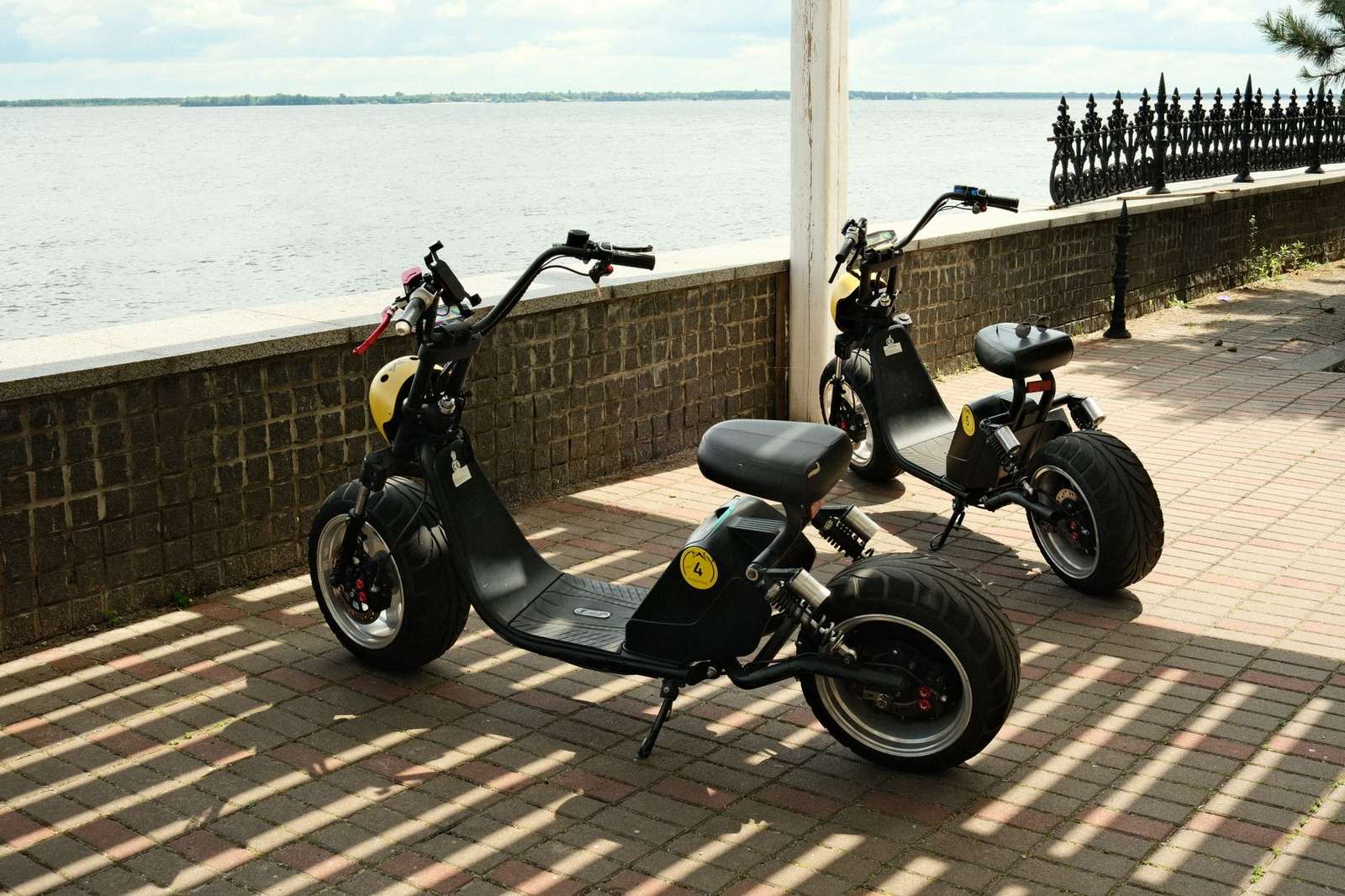
If the scooter lives indoors, fit suitable detection. The GOV.UK guidance says fire and rescue services recommend heat alarms rather than smoke alarms for garages or kitchens, with working smoke alarms in other rooms.
Heat and sunlight matter too. Keep the scooter away from radiators and other heat sources, and out of direct sunlight, because extreme temperatures can cause lithium-ion batteries to overheat.
Damp spots are best avoided for charging as well. The riding side of wet weather is covered in our guide to riding an electric scooter in the rain.
Warning signs your battery is failing
Batteries warm up a little during charging and use, which is normal. Stop charging at once if the battery feels extremely hot to the touch, because the GOV.UK guidance says it may be defective and at risk of fire.
Check the battery regularly for these signs:
- Bulging, swelling, lumps or leaks, which are common signs of a failing battery.
- Hissing or popping sounds.
- Unusual smells or smoke.
- Dents or punctures after a drop or crash.
UL Standards & Engagement lists smells, smoking and hissing or popping among the signs of thermal runaway. If you see any of them, stop using the battery.
Crashes are a main cause of hidden damage. Dorset & Wiltshire Fire and Rescue Service says batteries can be damaged by dropping them or crashing, and a damaged one can overheat and catch fire without warning. Learning electric scooter braking safety helps you avoid the falls that cause that damage.
Buying, replacing and modifying batteries
The safest choice is to buy from a reputable retailer. Fire services warn that counterfeit electrical goods are involved in many fires, and genuine chargers and battery packs may cost more but are worth it.
A few buying habits cut the risk:
- Look for CE or UKCA marking if you are in the UK, as the GOV.UK guidance advises.
- Be extra careful with second-hand, refurbished or converted scooters, where it is hard to tell whether a product is genuine.
- Buy spare batteries and chargers only from the manufacturer or an authorised supplier.
- Register the product so the manufacturer can contact you about a recall or safety alert.
In the United States, UL Standards & Engagement suggests choosing batteries and chargers evaluated to standards such as UL 2849 or UL 2272 and approved by the manufacturer for your device.
Resist tuning the scooter for more speed. The GOV.UK guidance says modification is not recommended because it generally increases the electrical load on the battery and drive system, which may overheat.
What should you do if a battery catches fire?
Do not try to put it out yourself. The fire service advice is to get out, stay out and call 999, as the National Fire Chiefs Council puts it, which is the UK emergency number.
Make sure everyone in your home knows the escape plan before you ever need it. That is another reason to keep the scooter clear of doors and hallways.
If a battery is damaged or worn out, stop using and charging it. Dorset & Wiltshire Fire and Rescue Service says not to put it in household waste or normal recycling, because crushed or punctured batteries can start fires in bin lorries and waste centres. Ask the manufacturer or your local authority about battery recycling.
The City of Madison Fire Department gives one extra tip as a neutral example: place clear packing tape over the contact points of a battery before you drop it off for recycling.
This guide is general education. Always follow your own manufacturer’s manual and local fire service advice.
Frequently asked questions
Can I charge my scooter overnight?
Show answer
Fire services advise against it. Their guidance is to charge only while you are awake and alert, and not to leave batteries on charge while you are asleep or away from home.
Can a scooter battery catch fire when it is not charging?
Show answer
Yes, if it has been damaged. UL Standards & Engagement says a damaged battery can enter thermal runaway even when it is not plugged in, sometimes hours or days later.
Is it safe to use a cheaper replacement charger?
Show answer
It is a risk. The GOV.UK guidance says third-party items that may not be safe or compatible could put your life at risk, so use the supplied charger or one authorised by the manufacturer.
Should I fit a smoke alarm or a heat alarm where I charge?
Show answer
In a garage or kitchen, fire and rescue services recommend a heat alarm. Keep working smoke alarms in your other rooms.
Can I put a worn-out scooter battery in the bin?
Show answer
No. Damaged or end-of-life lithium-ion batteries should not go in household waste or normal recycling. Use a manufacturer service or your local authority’s battery recycling.