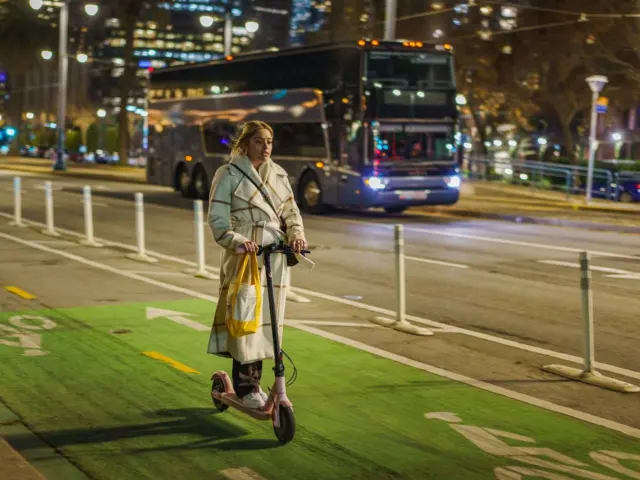
Wondering where you can legally ride? Electric scooter laws by country differ widely, but most set a minimum age and a speed cap and keep scooters off pavements. Check local rules before every trip.
The wider picture on staying safe sits in our guide to electric scooter safety rules.
| Item | Value |
|---|---|
| Germany: minimum rider age | 14 years |
| Germany: maximum speed | 20 km/h |
| France: maximum speed | 25 km/h |
| France: minimum rider age | 12 years |
| Singapore: maximum speed | 25 km/h on cycling paths and park connectors |
| United States: typical state speed limits | 15-20 mph |
These figures come from the Levy global overview and the Gyroor global guide, both retailer blogs rather than government texts. Rules change, so check the source and your local authority before you rely on them.
Why do electric scooter rules differ so much?
Most countries treat a scooter as something between a bicycle and a motor vehicle, and each one fills in the details itself. The result is a patchwork of age limits, speed caps and rules about where you may ride.
The United States shows how far this goes inside a single country. According to Gyroor’s guide dated March 10, 2026, the US has no federal law governing e-scooters, so states and cities set the rules (source). Levy’s overview says Canada works the same way, with legality varying between provinces and cities (source).
The same handful of points change almost everywhere:
- The minimum rider age.
- The maximum speed.
- Whether you may use roads, bike paths or pavements.
- Whether a helmet is required.
- Whether a licence, registration or insurance is needed.
Europe: Germany, France, the UK and Switzerland
In Germany, Levy’s overview (updated June 2024) says riders must be aged 14 or older and keep to 20 km/h, with bike paths allowed and sidewalks off limits (source). Gyroor adds that scooters are permitted on bike paths and roads but banned from sidewalks (source).
France allows e-scooters up to 25 km/h, and riders must be at least 12 years old, according to Gyroor’s March 10, 2026 guide. The same guide says helmets are required for riders under 18 and that scooters are prohibited on sidewalks in urban areas (source).
The United Kingdom is stricter. As of Gyroor’s March 10, 2026 guide, private e-scooters are illegal on public roads, bike lanes and sidewalks, while rental schemes operate in certain cities as part of government trials (source). Levy says the government launched its trial in July 2020 (source).
Switzerland ties the rules to power. Levy says a scooter with a top speed of 20 km/h and a motor of up to 500W can be used without registration, while more powerful ones need a driving licence and registration (source).

North America, Asia and Oceania
Outside Europe the same themes repeat, with a few surprises. Here is what the supplied guides report for each place:
- United States: Gyroor says most states allow e-scooters with speed limits typically between 15-20 mph (source).
- Singapore: e-scooters are allowed at up to 25 km/h on cycling paths and park connectors, but are banned from sidewalks and roads (source).
- Taiwan: Levy says riders must be at least 16 years old and hold a driver’s licence (source).
- Japan: Gyroor says e-scooters count as motor vehicles needing registration, insurance and a licence, though a newer low-speed category under 20 km/h needs no licence on bike paths (source).
- New Zealand: Gyroor reports a 300W power limit, with riding allowed on footpaths and bike lanes at up to 15 km/h (source).
Australia is a state-by-state picture. Levy’s age guide says the minimum age varies by state, generally between 16 and 18 years old (source).
Age limits and helmets: what the rules usually say
Minimum ages sit in a fairly narrow band, though they are far from uniform. The examples below show how much neighbouring countries can differ, and each carries its own source.
- France: 12 years old, according to Gyroor’s March 10, 2026 guide (source).
- Germany: 14 years old, according to Levy’s overview updated June 2024 (source).
- Taiwan: 16 years old, plus a driver’s licence, per the same Levy overview (source).
- United States: most states set the minimum at 16 years old, per Levy’s September 11, 2024 age guide (source).
The practical lesson is that your home age limit tells you little about the rules abroad. A rider who may legally use a scooter in France at 12 would be too young in Germany at 14, and too young again in Taiwan at 16.
Age is also only the first test. Taiwan adds a licence requirement, and Gyroor describes Japan as treating e-scooters as motor vehicles needing registration, insurance and a licence, apart from a low-speed category under 20 km/h (source).
Helmet rules vary more than age rules. A helmet is recommended but not mandatory in Germany, while France requires one for riders under 18, according to the same March 10, 2026 Gyroor guide (source). Rules tied to a rider’s age make accidental offences easy, because the answer changes at every border.
Where no law demands protective gear, the choice is yours, and fit and certification matter more than price or looks. Even where the law is silent, a proper electric scooter helmet is worth wearing on every ride, and our electric scooter helmet guide covers what to look for. Weather changes the risk too, so read up on riding an electric scooter in the rain before a wet trip.
How to check the rules before you ride
Summaries online, including the ones above, can lag behind new legislation or disagree with each other. A short routine keeps you on the right side of the local law:
- Find the national rules on an official government website for the country you are visiting.
- Look up the state, province or city rules, since they often override national summaries.
- Confirm the minimum age and whether you need a licence, registration or insurance.
- Compare your scooter’s top speed and motor power with the legal limits.
- Check where you may ride and park: road, bike path or pavement.
If a rental scooter is your plan, the operator’s app usually shows local restrictions, but the legal duty to follow the rules stays with you.
Frequently asked questions
Are private electric scooters legal in the UK?
Show answer
Generally no. Levy’s guide, updated June 30, 2024, says riding on public roads, pavements or cycle lanes in the UK is illegal and can bring fines, with use limited to private land with the owner’s permission (source). Rental trials are the usual exception, so read the UK government’s own wording before you travel.
What is the minimum age in Germany and France?
Do I need a helmet to ride abroad?
Show answer
It depends on the country. Gyroor says helmets are recommended but not mandatory in Germany and required under 18 in France (source). Wearing one is a sensible default anywhere.